
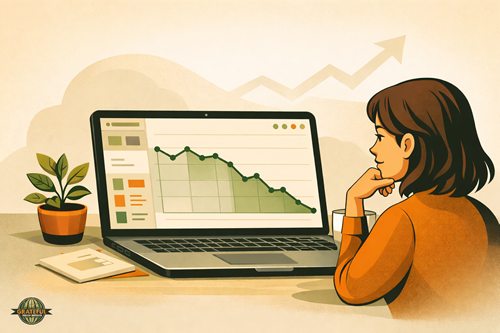
You Didn’t Touch Your Website.
So, Why Did Traffic Drop?
You log into Google Analytics, or you get a report from the company handling your website traffic reports, and there it is a noticeable dip.
Your website traffic dropped.
But you did not redesign anything.
You did not change the content.
You did not break anything.
So what happened?
Before panic sets in, take a breath. Traffic drops are common, and they do not automatically mean your website is broken, hacked, or doomed.
Let’s walk through the real reasons this happens and what you can actually do about it.
Google Changed Something
Google updates its algorithm constantly. Some updates are minor. Others are significant and can shift rankings overnight.
If your traffic dropped suddenly, it could be tied to an algorithm update focused on:
-
Content quality
-
User experience
-
Page speed
-
Helpful content signals
-
Spam detection
You can monitor confirmed updates on the official Google Search Central Blog
If rankings shifted after an update, the solution is usually improving content quality and user experience, not panicking and rewriting everything.
You Lost Rankings Without Realizing It
Sometimes rankings decline gradually. This is very normal and happens all the time. Ranking is not static.
You may still be on page one, but instead of position 3, you are now position 8. That difference can cut traffic significantly.
Common causes include:
-
Competitors are publishing stronger content
-
New businesses entering your market
-
Outdated blog posts
-
Thin service pages
-
Lack of ongoing SEO work
SEO is not a one-time setup. It is maintenance, optimization, and improvement over time.
Technical SEO Issues You Cannot See
This is where things get sneaky.
Your website can look perfectly fine on the surface, but have backend issues such as:
-
Pages accidentally de-indexed
-
Broken internal links
-
Slow load speeds
-
Hosting instability
-
Security warnings
-
Plugin conflicts
Google cares deeply about speed and user experience. You can test your performance using Google PageSpeed Insights
Even a few seconds of delay can impact rankings.
Seasonal Traffic Changes
Some industries naturally fluctuate.
Examples:
-
Accounting spikes before tax season
-
Retail surges before holidays
-
Travel increases in spring and summer
-
Nonprofits may fluctuate based on campaigns
If your traffic decrease aligns with seasonal patterns, it may not be a problem at all.
Compare year-over-year data before drawing conclusions.
Bot Traffic Previously Inflated Your Numbers
This one surprises people.
Sometimes traffic looks strong, but a portion of it was bot traffic, referral spam, or international crawling activity.
If your host or security system recently filtered bots more effectively, your traffic may appear to drop even though real human visitors stayed the same.
Lower numbers are not always bad if they are cleaner and more accurate.
Your Content Has Gone Stale
Google favors fresh, helpful, relevant content.
If you have not:
-
Updated blog posts
-
Added new content
-
Expanded service pages
-
Improved internal linking
You may gradually lose visibility.
Refreshing existing content often performs better than constantly publishing brand new posts.
You Were Ranking for Accidental Keywords
Sometimes traffic comes from keywords that were never strategically targeted.
When Google refines intent matching, you can lose traffic that was not aligned with your actual services anyway.
If the lost traffic was not converting, the dip may not impact your bottom line.
Traffic volume alone does not equal business growth.
What Should You Do If Your Website Traffic Dropped?
Here is a calm, practical checklist:
-
Check Google Search Console for indexing or coverage issues
-
Review recent algorithm updates
-
Compare year-over-year data
-
Test your page speed
-
Review top-performing pages for ranking shifts
-
Refresh outdated content
-
Ensure analytics tracking is still installed correctly
Avoid making drastic changes without diagnosing the real issue first.
When to Be Concerned
A temporary dip is normal.
You should investigate further if:
-
Traffic drops more than 30 percent suddenly
-
Conversions drop along with traffic
-
You see indexing errors
-
You receive security warnings
-
Entire sections of your site disappear from search results
That is when deeper technical and SEO analysis is warranted.
The Bigger Truth About Website Traffic
Website traffic will naturally fluctuate. Even well-optimized, actively maintained websites experience dips.
What matters more than raw traffic numbers is:
-
Are the right people visiting?
-
Are they converting?
-
Are you visible for your core services?
-
Is your website technically healthy?
A slight dip does not mean failure. It usually means it is time for refinement, not panic.
Final Thoughts
If your website traffic dropped and you did not change anything, it does not mean something is broken.
It usually means:
-
Search engines evolved
-
Competitors improved
-
Technical elements need tuning
-
Content needs refreshing
Websites are living digital assets. They require monitoring, maintenance, and strategic adjustments over time.
If you are unsure whether your traffic decline is normal or something deeper, a professional audit can provide clarity and a clear action plan.
And sometimes, the numbers are simply reminding you that your website deserves the same attention you give the rest of your business.
Contact us today if you want help monitoring your traffic. This is one of the many services that we offer.